Electric Vehicles Demand a Different Approach to Thermal Runaway Protection
Lithium-ion batteries power everything from smartphones to industrial equipment, and the fundamentals for preventing thermal runaway in lithium-ion batteries apply across all of them. Understanding how to prevent thermal runaway in lithium-ion batteries starts with recognizing that not all applications carry the same risk profile. But EV applications introduce a level of complexity that general prevention strategies alone can’t address. The scale, the consequences, and the engineering constraints are categorically different — and the insulation solutions need to be as well.
Thermal Solutions Engineered for Your Application: Contact Electrolock to discuss high-temperature insulation challenges tailored to your thermal requirements.
Why EV Batteries Face Unique Thermal Runaway Challenges
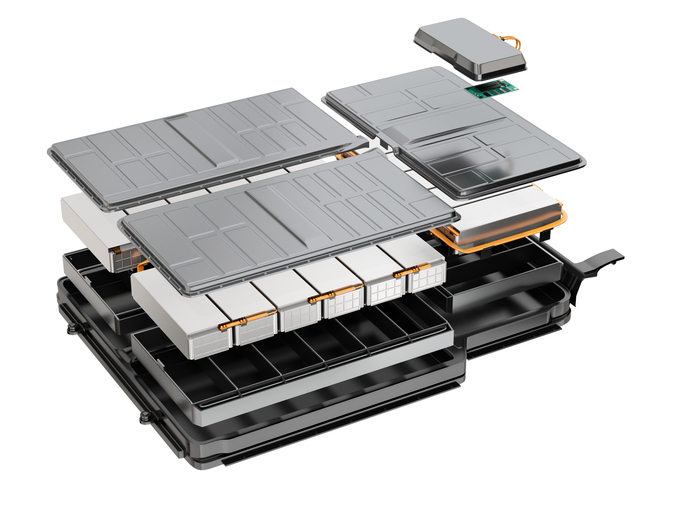
A consumer battery pack contains a handful of cells. An EV battery pack contains hundreds to thousands, storing tens of kilowatt-hours of energy in a confined space optimized for vehicle packaging and weight. When a single cell enters thermal runaway in that environment, temperatures can exceed 1200°C with molten metal ejecta and pressurized gas released in milliseconds. Without properly engineered barriers, cell-to-cell propagation can occur in under 60 seconds.
The consequences extend well beyond battery damage. Vehicle occupant safety, total vehicle loss, and the reputational stakes for automotive OEMs make thermal runaway protection a foundational engineering requirement — not an afterthought. At the same time, EV design imposes hard constraints: every millimeter of insulation thickness competes with energy density, and every gram affects driving range. This is the central challenge: maximum protection with minimum space and weight penalty.
Performance Requirements for EV Thermal Runaway Insulation
Meeting this challenge means evaluating insulation materials across four dimensions simultaneously.
Thermal performance is the most obvious requirement. Materials must withstand temperatures of 800–1200°C or higher without structural failure, maintain low thermal conductivity to slow heat propagation between cells, and carry UL 94 V-0 fire resistance or better. Critically, they must perform during a thermal event, not just under normal operating conditions.
Mechanical requirements are equally demanding. Pouch cells expand and contract during every charge cycle, requiring insulation materials that can manage compression without degrading. All formats require dimensional stability through years of thermal cycling, impact resistance for collision scenarios, and durability across a vehicle’s 10–year service life.
Electrical properties cannot be overlooked in high-voltage EV packs. Dielectric strength is essential for voltage isolation, and any failure in electrical insulation can itself trigger the thermal events that the barriers are designed to contain. See Electrolock’s high-voltage insulation solutions for how electrical and thermal protection intersect.
Finally, design constraints drive real-world material selection. High-volume automotive manufacturing demands insulation that is thin, lightweight, cost-effective at scale, and compatible with automated production processes.
Material Solutions for EV-Scale Thermal Protection
Mica-Based Barriers
For EV applications, mica is the most capable dual-function solution available. It withstands continuous temperatures above 1000°C, provides exceptional dielectric strength for high-voltage isolation, and can be engineered to fit specific cell configurations — cylindrical formats like 18650, 21700, and 4680, as well as pouch and prismatic cells. Electrolock’s mica solutions and Go-Therm Thermal Runaway Barrier are specifically designed for the demands of automotive battery systems. Explore the full range of battery insulation solutions.
Glass Fiber Composites
Glass fiber materials offer excellent flame resistance with structural integrity that holds up under compression, making them particularly well-suited for pouch cell applications where materials must manage cell expansion without losing protective function. Electrolock’s Pyrel-Therm product line addresses extreme heat environments where glass fiber composites are the right engineering fit.
Engineered Laminates
The most demanding EV applications often require a multi-layer approach: combining thermal insulation, flame barriers, compression management, and in some cases heat-spreading foils into a single engineered stack. This approach optimizes performance while minimizing overall thickness, which is a critical advantage in space-constrained pack designs. The specific material stack is matched to cell chemistry, format, and pack architecture.
Engineering the Right Solution for Your EV Battery Design
Cell format shapes everything when determining how to prevent thermal runaway in lithium-ion batteries at the EV scale. Cylindrical cells can accommodate rigid barriers or foam encapsulation. Pouch cells require flexible, compressible materials that accommodate breathing through charge cycles. Prismatic cells can work with rigid or semi-rigid solutions depending on pack design.
Beyond material selection, performance validation is essential. Electrolock’s testing capabilities allow engineers to validate critical parameters — propagation delay time, temperature resistance, and structural integrity — under actual thermal runaway conditions rather than relying solely on material data sheets.
Cell chemistry, pack energy density targets, vehicle packaging constraints, and manufacturing processes all factor into the final specification. This is why Electrolock works with OEMs from the design phase through production, bringing 65+ years of materials engineering expertise to the specific realities of automotive development.
Building Safer EVs from the Inside Out
Knowing how to prevent thermal runaway in lithium-ion batteries at EV scale means recognizing that protection is not a single material decision; it is a system engineering challenge. High-performance insulation for EV applications must simultaneously manage extreme heat, maintain electrical isolation, survive mechanical demands, and fit within aggressive space and weight budgets. Getting it right requires matching materials to your specific application with precision.
Contact Electrolock to discuss your EV battery thermal protection requirements and find the engineered solution your design demands.